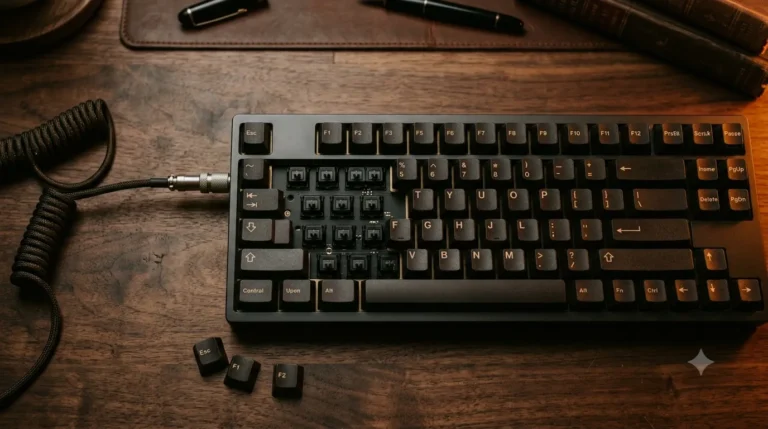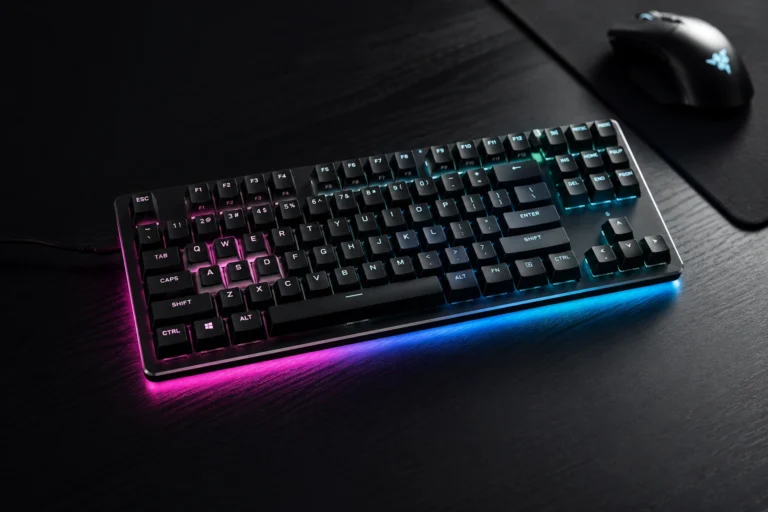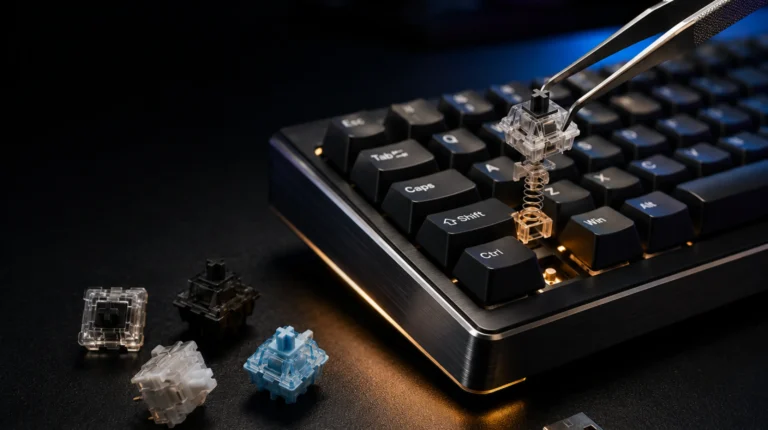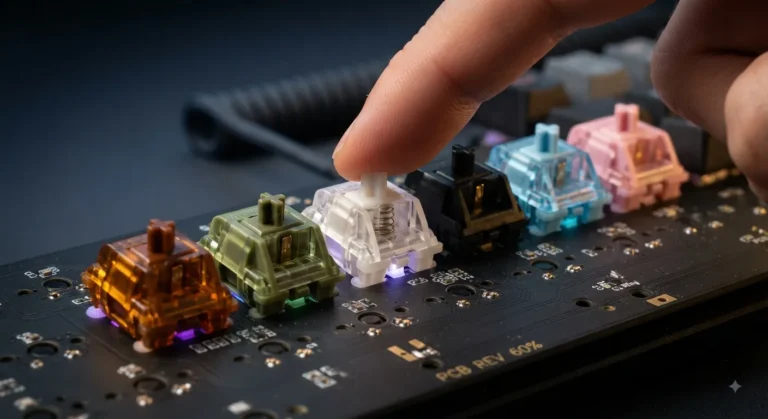
Best Switches for Gaming: Linear, Tactile & Hall Effect

This article contains affiliate links. If you buy through them, I earn a small commission at no extra cost to you. I only recommend keyboards I’ve actually tested. As an Amazon Associate I earn from qualifying purchases.
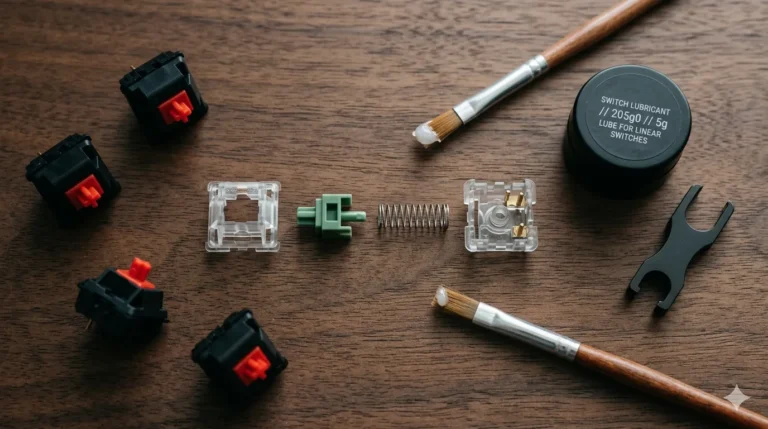
Here’s the part nobody selling switches wants to admit: for most gamers, the difference between a $7 set of Gateron Yellows and a $90 set of boutique linears is mostly in your head. I’ve been swapping, lubing, and testing keyboards for over a decade, and I’ll tell you upfront — the real shift in 2026 isn’t another flavor of linear. It’s whether you’re still using traditional mechanicals at all, or whether you’ve moved to Hall effect.
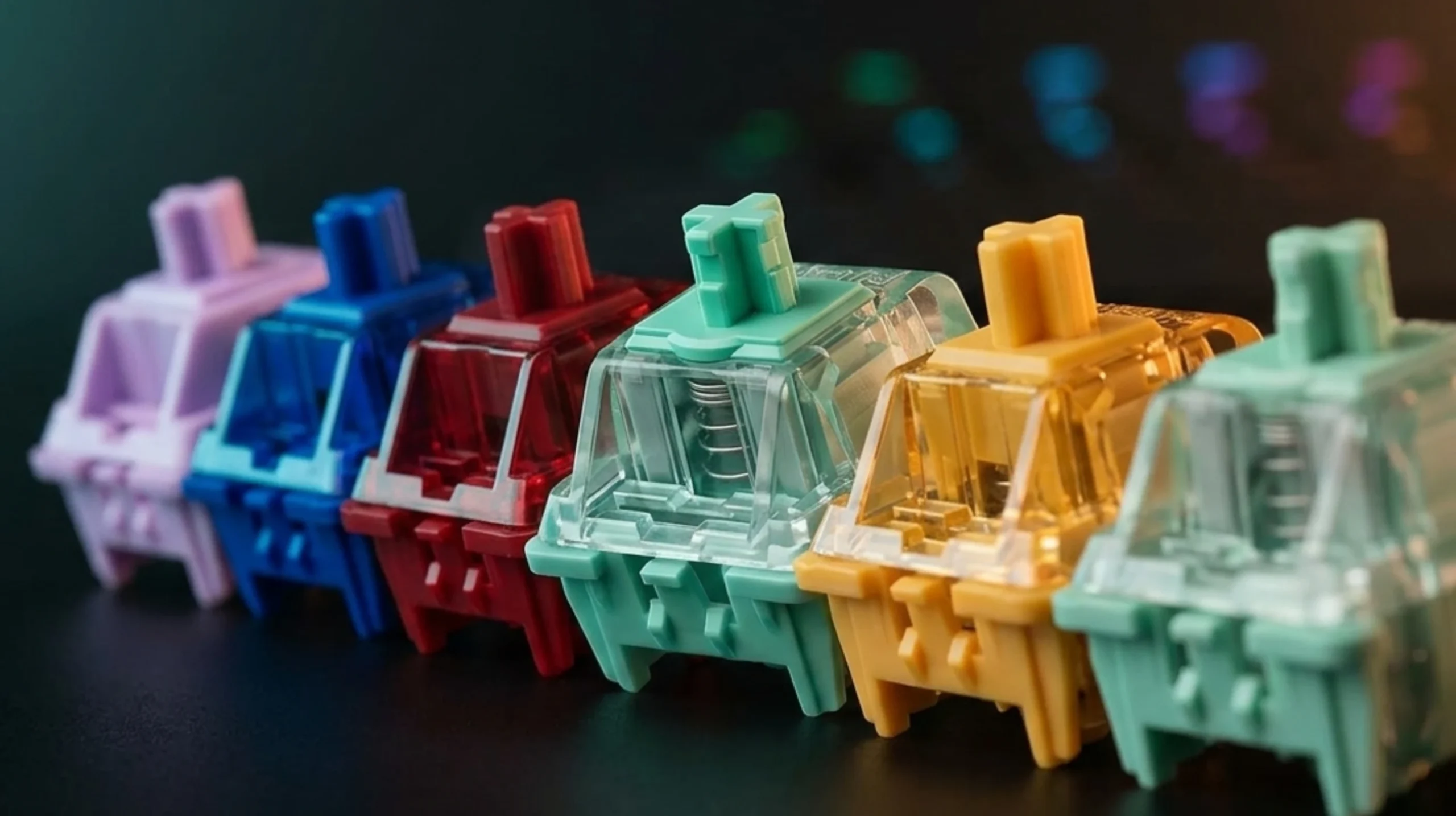
That’s the honest framing for this guide. The best switches for gaming in 2026 come down to three things: what you actually play, how much typing you do on the same board, and whether magnetic switches are worth the buy-in for you. Let’s get into the picks, the tradeoffs, and the ones I’d skip.
Quick Comparison: Best Switches for Gaming at a Glance
If you just want the verdict and a buy button, here it is. I’ve sorted this by what kind of gamer you are, not by price — because the right switch for a Counter-Strike grinder is the wrong switch for someone playing Final Fantasy XIV eight hours a night.


| Best For | Switch | Type | Actuation | Why It Wins |
|---|---|---|---|---|
| Competitive FPS (CS2, Valorant, Apex) | Gateron Magnetic Jade | Hall Effect | Adjustable 0.1–4.0mm | Rapid trigger plus per-key actuation |
| Budget All-Around Gaming | Gateron Pro Yellow 3.0 | Linear | 2.0mm | Smooth, cheap, factory-lubed well |
| MMO / RPG Marathons | Akko V3 Cream Blue Pro | Tactile | 1.9mm | Light bump, low fatigue, great sound |
| Quiet Gaming (office, late night) | Gateron Cap V2 Silent | Silent Linear | 2.0mm | Genuinely quiet, still smooth |
| Premium All-Around | Gateron Oil King | Linear | 2.0mm | Factory-lubed, deep sound, fast |
| Hardcore Esports | Wooting Lekker | Hall Effect | Adjustable 0.1–4.0mm | Pro-grade rapid trigger, proven hardware |
Most people reading this should land on row one or row two. Don’t overthink it.
What Actually Matters in a Gaming Switch
Forget the marketing spec sheets for a second. What you’ll actually feel during a match comes down to a handful of things:
- Actuation point — how far you press before the key registers. Lower means faster response, but also more accidental presses.
- Actuation force — how heavy the press feels. Lighter is faster but tiring if you mash; heavier is slower but harder to misfire.
- Reset point and rapid trigger — how fast the switch can re-register. This is where Hall effect smokes traditional mechanical.
- Travel and bottom-out feel — the texture of the press itself. Affects long-session fatigue more than people admit.
- Noise — matters for streamers, voice chat, and the people you live with.
Notice I didn’t say “RGB” or “gaming-grade.” That stuff is marketing. The switch under your finger is what’s doing the actual work.
Best Linear Switches for Gaming
Linears are still the default recommendation for gaming. Smooth, no bump, predictable. Here are the ones I keep going back to.
Gateron Pro Yellow 3.0 — the budget king

- Actuation Force: 50±15 gf, Bottom-Out Force:67gf, 35pcs included in each pack
- Stem Material: POM, Top Housing Material: PC Transparent, Bottom Housing Material: Nylon , Milky
- Pre Travel Distance: 2.0±0.6 mm, Total Travel Disatance: 4.0 mm Max
I’ve recommended Gateron Yellows in some form for years, and I’m not going to stop now. The Pro Yellow 3.0 fixes the slight scratch the older versions had, comes factory-lubed well enough that most people won’t bother re-lubing, and lands around $0.20–0.25 per switch in bulk. They’re light (50g actuation), fast, and the sound is a respectable medium-pitched pop. For an all-around gaming board, this is the safest pick on the list.
Cherry MX2A Red — the redemption arc
Cherry’s MX2A revision is a real upgrade over the old MX Red. Smoother, quieter, and the stem wobble is finally reined in. If you already own a Cherry-mount board and you want a no-drama linear with the original Cherry feel, MX2A Reds make sense. They’re not the cheapest option, but stock availability is everywhere in 2026 and you can find them pre-installed in most major OEM gaming boards.
Gateron Oil King — premium pick that earns it

- Newest Gateron Oil King V2 switch prelubed switches-New upgraded Enhanced pins version.
- Oil King Switches:5-pin Linear Switch,Actuation Force:55gf±5gf,Bottom Force:65±10gf,Total travel:4mm Max,Life:60000000 c…
- Gold touching Point, supports 2-pin or 4-pin LED lights, and non-protruding SMD lights.
Oil Kings are heavier (55g actuation, 60g bottom-out, but they feel a touch heavier in practice) with the deep, full sound people chase. Factory-lubed properly out of the box. I ran them as my daily driver on a TKL build for three months and never wanted to swap. Here’s the catch: they’re heavier than typical gaming linears, so if you mash keys hard in shooters, your fingers will notice by hour four.
Best Tactile Switches for Gaming (and Why They’re Underrated)
Conventional wisdom says tactiles are for typing, linears are for gaming. That’s lazy advice. If you play MMOs, RPGs, or anything with heavy ability rotations, the tactile bump gives you confirmation your press registered without bottoming out every key. Over a long session, that saves your fingers.
Akko V3 Cream Blue Pro — best tactile for gaming, period

- Akko v3 Generation Pro Switches – Our creamy switches now feature alloy copper and palladium gold contact, which provide…
- Smooth& Creamy – Akko v3 pro 45gf tactile creamy blue switches provide a unique and satisfying typing experience with th…
- MX Style Compatibility – Akko keyboard creamy switches come with an MX style structure, making them compatible with most…
Light tactile bump up top, smooth linear travel after. Pre-lubed reasonably well. About $0.30 per switch. They sound great and they don’t fight you on rapid presses. I’d put these in an MMO build before any Cherry tactile, and it’s not close.
Gazzew Boba U4T — for heavy-handed typists who also play
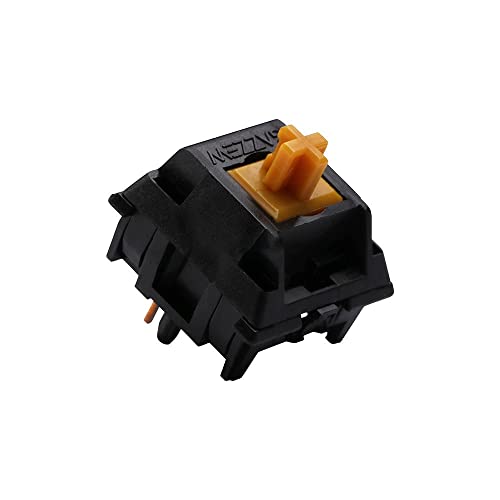
- Boba Black U4 / U4T Switch: The new model uses a black plastic case, the U4 is a silent tactile switch and the U4T is a …
- The new black plastic is very smooth and softer than nylon PA66. Compared with polycarbonate, it has a higher melting te…
- The normal version is compatible with any lamp beads (SMD, four-pin, two-pin lamp beads), and the RGB version is only co…
Stronger bump, deeper sound, higher actuation force (62g). If you bottom out hard and want a switch that pushes back, these are it. Not what I’d put in a twitch-shooter rig, but for slower-paced strategy, RPGs, or someone who switches between Excel and Stellaris all day, they’re excellent.
Magnetic and Hall Effect: The Real 2026 Shift
This is the part of the buying decision that’s actually changed. Hall effect (magnetic) switches don’t have physical contacts — they detect the magnet inside the stem at any point in its travel. Which means you can do things normal switches can’t:
- Adjust the actuation point per key — 0.1mm for movement keys, 3mm for reload, all on the same board.
- Use rapid trigger — the switch re-registers the instant it moves upward, not after a full mechanical reset.
- Get analog input — like a controller trigger, for racing and flight sims that support it.
For Counter-Strike 2, Valorant, Apex, and any game where counter-strafing or instant re-press matters, this is a legitimate edge. Not “feel.” Measurable.
Gateron Magnetic Jade — the mainstream pick

- Tip: Available keyboard (SteelSeries / Wooting / Corsair /Rakka / HM /Nuphy/ Varmilo/ Fnatic/ Teamwolf/ MAGNET/ SIKAKEYB…
Most Hall effect boards from Keychron, Akko, Epomaker, and similar in 2026 ship with Gateron Magnetic Jades or a close variant. Smooth, quiet, light initial force (around 30gf). If you’re buying a magnetic board this year, this is what you’ll most likely get, and it’s solid.
Wooting Lekker — the pro-grade option
Wooting basically invented the consumer Hall effect keyboard, and the Lekker switches in the 60HE and 80HE are still the benchmark for competitive play. The boards cost what they cost for a reason. If you’re playing ranked seriously, this is what your better peers are on.
Honest caveat: Hall effect switches require a Hall effect board. You can’t drop magnetic stems into a regular hot-swap PCB. That’s the real buy-in. And for a casual player, you don’t need it — a $60 hot-swap board with Gateron Yellows will not be the reason you lose matches.
Speed Switches: Useful Tool or Marketing Trap?
“Speed” linears like Cherry MX Speed Silver and Kailh Speed Silver chop the actuation point down to around 1.2mm. Sounds great on paper. In practice, on a board you also type on, you’ll generate ghost presses and double-tapped letters until your fingers learn to float.
If you’ve got a dedicated gaming board you never type on, sure, give Speed Silvers a shot. Otherwise, you’re better off with a standard 2.0mm linear — or, if you actually want adjustable actuation, going Hall effect and skipping the half-measure. Speed switches were a smart idea before magnetic switches went mainstream. They’re a tougher sell now.
Switches to Avoid for Gaming
A short list of switches that look tempting but I’d skip for a gaming-focused board:
- Cherry MX Blue and other classic clickies — slow reset, loud enough to mess up voice chat, and genuinely fatiguing in long sessions.
- Kailh Box Jade and Box Navy — same issues, even louder. Great for typing, bad for shooters.
- Anything labeled “gaming switch” with no spec sheet — if a brand won’t list actuation force and point, they’re hiding the answer.
- Unbranded clones from massive marketplaces — quality control is genuinely inconsistent. Stick with Gateron, Cherry, Kailh, Akko, Outemu, or known boutique makers like Gazzew and JWICK.
How to Pick the Best Switches for Your Games
Quick decision framework:
- Mostly competitive FPS? Hall effect, full stop. Gateron Magnetic Jade if you’re price-conscious, Wooting Lekker if you’re not.
- Mostly MMO, RPG, or strategy? Light tactile — Akko V3 Cream Blue Pro or similar mild tactile.
- Mixed use, also typing all day? Standard 2.0mm linear — Gateron Pro Yellow 3.0 or Cherry MX2A Red.
- Roommates, kids, or a stream mic? Silent linears — Gateron Cap V2 Silent or Outemu Silent Cream.
- One board for everything, decent budget? Hall effect board with Gateron Magnetic Jades. Low actuation for movement keys, normal for the rest. Done.
Buy a hot-swap board if you can. If you decide in three months that linears bore you, swapping stems takes fifteen minutes instead of replacing the whole keyboard.
Final Verdict: The Best Switches for Gaming Right Now
If you held a soldering iron to my head and made me pick: Gateron Pro Yellow 3.0 for most people, Gateron Magnetic Jade in a Hall effect board for the competitive crowd. That’s where I’d put my own money in 2026, and that’s what I’ve told friends asking what to buy.
The best switches for gaming aren’t the most expensive ones, and they’re not the loudest, smoothest, or most thocc. They’re the ones that disappear under your fingers and let you focus on the game. Find that, and you’re done — until the next hype cycle starts.
This article contains affiliate links. If you buy through them, I earn a small commission at no extra cost to you. I only recommend keyboards I’ve actually tested. As an Amazon Associate I earn from qualifying purchases.