Gateron Switches Explained: Yellow, Brown, Red, and More

This article contains affiliate links. If you buy through them, I earn a small commission at no extra cost to you. I only recommend keyboards I’ve actually tested. As an Amazon Associate I earn from qualifying purchases.
I’ve torn down enough Gateron-equipped boards over the past decade to know one thing: most of what people argue about online doesn’t matter once you actually type on the things. Gateron switches went from being the cheaper Cherry knockoff to a legit force, and Cherry’s been playing catch-up ever since. If you’re trying to figure out which Gateron belongs in your next build — or in the prebuilt sitting in your cart right now — this is the rundown I wish someone had handed me back when I was hand-lubing my first set of Yellows with a paintbrush meant for model kits.
The brand makes everything from $0.25-each daily drivers to switches that genuinely compete with $1+ boutique stuff. Same logo on the bag. Wildly different experiences inside.
Quick Comparison: Which Gateron Switches Are Right For You?
Here’s the cheat sheet. Pick the row that matches what you actually care about, then keep reading if you want the reasoning.

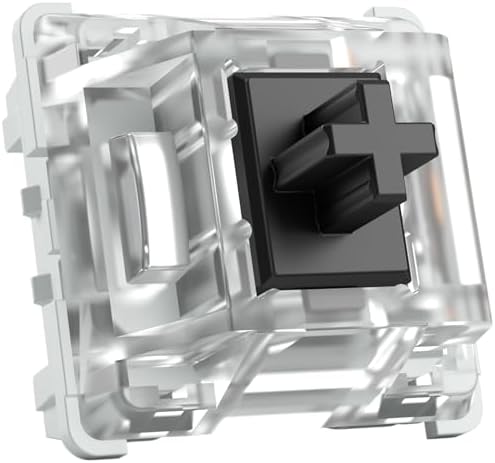


| Your Priority | Switch | Type | Weight | Why It Wins |
|---|---|---|---|---|
| Best all-around for gaming | Gateron Yellow Pro 2.0 | Linear | 50g | Smooth, fast, dirt cheap |
| Best for competitive FPS | Gateron Magnetic Jade | Hall Effect | Adjustable | Tunable actuation + rapid trigger |
| Best for typing / “thock” sound | Gateron Oil King | Linear | 55g | Deep sound, factory-lubed heavy |
| Best tactile | Gateron Baby Kangaroo | Tactile | 67g | Sharp bump, zero scratch |
| Best clicky | Gateron Blue | Clicky | 60g | Crisper than MX Blues |
| Best budget pick | Gateron Yellow KS-3 | Linear | 50g | The cult favorite, under $0.30/switch |
| Best premium linear | Gateron CJ | Linear | 50g | Snappier and brighter than Oil King |
| Best for office use | Gateron Brown Pro | Tactile | 55g | Light bump, your coworkers won’t file HR |
| Best for low-profile boards | Gateron Low-Profile Red | Linear | 45g | Smoothest slim mech switch out there |
Who Gateron Is, and Why It Matters
Gateron is a Chinese switch manufacturer that started life by cloning Cherry MX designs and undercutting them on price. That was the story for a long time. It isn’t anymore.
The thing Gateron figured out — years before Cherry did — is that factory pre-lube actually matters. So do smoother nylon housings, tighter stem-to-housing tolerances, and a willingness to iterate. While the hobby was spending Saturday afternoons hand-lubing Cherry Reds with 205g0 just to make them tolerable, Gateron was shipping switches that already felt better straight out of the bag.
That shift is why “gateron switches” became default-recommended in modding communities. Not because they’re cheap. Because they’re good.
The Standard KS Gateron Switches
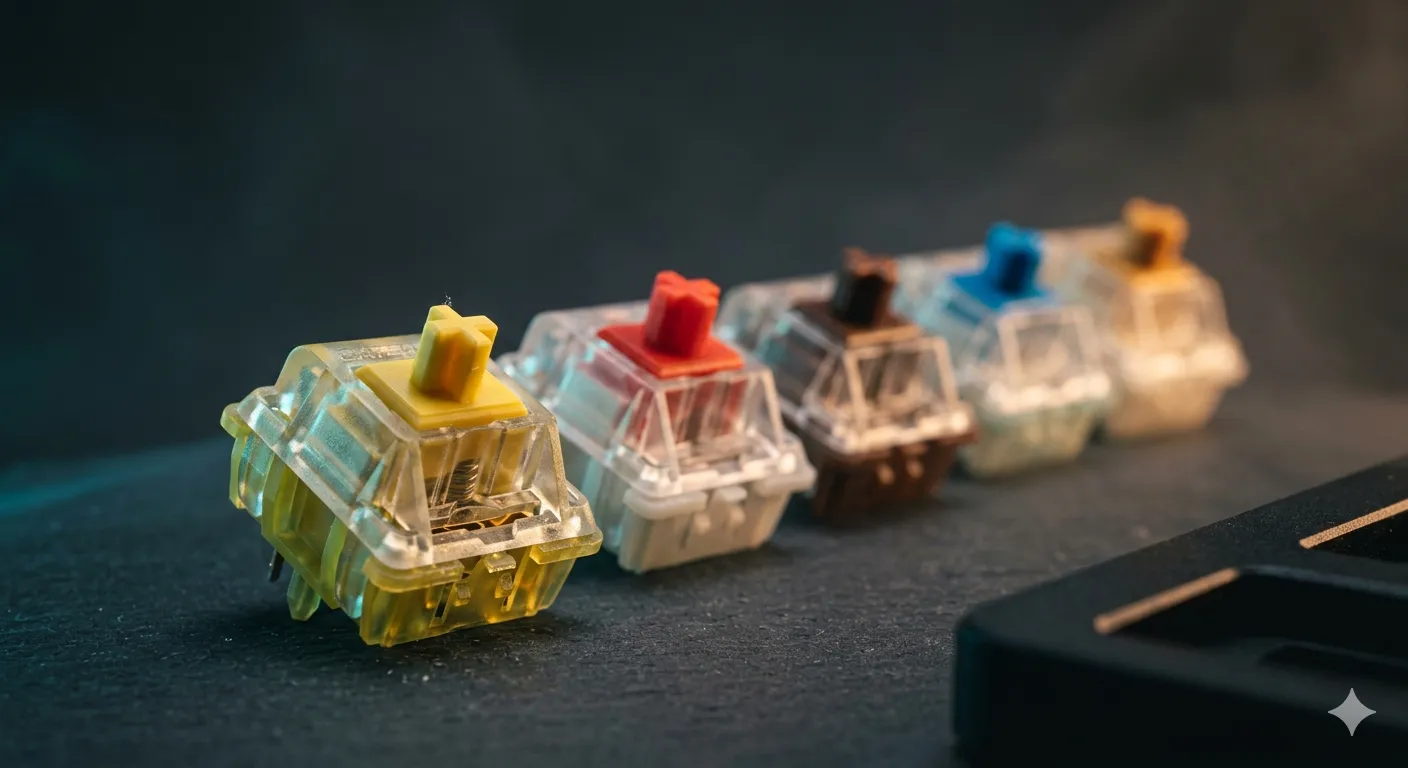
“KS” just refers to Gateron’s stem mold series — KS-3 being the most common standard. The classic lineup mirrors Cherry’s color code, but the actual feel is its own thing. Don’t assume a Gateron Brown types like a Cherry Brown. It doesn’t.
- Gateron Yellow — 50g linear, 4mm travel, 2mm actuation. The one everyone recommends. Smooth, slightly heavier than a Red, absurdly cheap. I’ve put these in three personal builds and I’d put them in a fourth without thinking twice.
- Gateron Red — 45g linear. Lighter than Yellows, easier on the fingers for long sessions. Good if Yellows feel like wading.
- Gateron Brown — 45g tactile. The bump is mild. If you want a real tactile event, look elsewhere. If you want a Red with a hint of texture, this works.
- Gateron Blue — 60g clicky, click-jacket design. Crisper sound than MX Blues, sharper actuation. Your coworkers will hate you. I respect the choice.
- Gateron Black — 60g linear. Heavier than Yellows, less popular these days but still solid for typists with strong fingers.
- Gateron Clear — 35g linear. Featherlight. Some people love it. Most accidentally type “the” as “tttthe.”
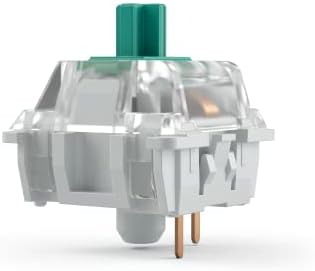
- Gateron Green — 80g clicky. Niche. Loud. Heavy. Buy these only if you know exactly why.
The Yellow earned its reputation honestly. It’s been the budget switch to beat for years, and almost every “smooth linear under $30” comparison eventually circles back to it.
The Gateron Pro Series: Factory-Lubed and Mostly Worth It
A few years back Gateron introduced the Pro line — basically the same switches as the KS standards, but factory-lubed and (in the Pro 2.0 versions) with longer-pole stems and updated materials for a deeper sound.
Here’s the catch: factory lube is inconsistent. Sometimes it’s perfect. Sometimes two or three switches in the bag are over-lubed and feel sluggish. For anyone who’s never going to hand-lube anything, though, the Pros are still a clear upgrade.
The Pro picks worth knowing:
- Yellow Pro 2.0 — Smoother than the original Yellow, slightly deeper bottom-out. Currently the default budget recommendation in most modding communities, and it deserves the spot.
- Red Pro — If 50g feels heavy, this is your switch.
- Brown Pro — Genuinely the most usable Brown I’ve ever typed on. Still mild, but the lubed bump feels less gritty than the standard.
Stick to Pro 2.0 over the original Pros wherever you can find them. The bottom-out feel is noticeably better.
Premium Gateron Switches: Oil King, CJ, Baby Kangaroo
This is where Gateron stopped being the budget brand and started competing on the high end. Some of these go toe-to-toe with switches that cost twice as much.
Gateron Oil King
Linear, 55g actuation, ~60g bottom-out, long-pole stem, factory-lubed with a heavy oil compound. The sound profile is deep — that “thock” people obsess over — and the feel is creamy in a way that genuinely earns the hype. I ran a 65% gasket build with Oil Kings as my daily driver for three weeks. The closest thing to a no-mod boutique experience you’ll get at this price.
If you want the trendy dark-stem linear with the deep sound, this is it. I’ll admit it: I’m mildly tired of the thock discourse, but the Oil King is the real deal.
Gateron CJ
A lighter, snappier linear than the Oil King. 50g actuation, shorter-pole, brighter sound. CJs are what I reach for when a build leans too bassy and I want some clack back in the mix. Plenty of builders rank them above Cherry’s premium lineup, and they’re not wrong.
Gateron Baby Kangaroo
The Baby Kangaroo is the tactile that people who say “I don’t like tactiles” actually like. It’s a scaled-down version of the original Kangaroo — sharp bump, fast reset, no mushy aftertaste. Around 67g.
If you wanted Holy Pandas without the price tag and the gatekeeping, the Baby Kangaroo gets you 85% of the way there. Honest take: it’s the best tactile Gateron makes, full stop.
Gateron North Pole, Box Ink V2, and friends
The North Pole is a two-stage spring linear with a clean sound. The Box Ink V2 is genuinely beautiful when lubed. There are roughly fifty other limited-run Gaterons floating around in any given season, and ninety percent of them are slight stem and housing variants. Don’t lose sleep chasing them.
Hall Effect Gaming Gateron Switches
Hall effect switches use magnets instead of metal contacts. The practical result: you can adjust your actuation point in software, anywhere from about 0.1mm to 4mm. You can also enable rapid trigger, which resets the switch the moment you start lifting your finger. That’s a huge deal in FPS games, Counter-Strike especially.
Gateron Magnetic Jade is the standout. It’s compatible with most major HE PCBs (Wooting-style and a growing list of Chinese HE boards). The switches are factory-lubed, the magnet response is consistent across the travel range, and the linear feel is good enough that it doesn’t feel like a “gamer tax” version of a real switch. There’s also a Magnetic White if you want something lighter.
One thing to know before you click buy: hall effect boards aren’t standard hot-swap. Magnetic Jades only work in HE-compatible PCBs. Drop them into your Keychron Q1 and nothing will happen.
If you play ranked anything, the gaming uplift from HE is real — not marketing fluff. Most current HE boards hit an 8000Hz polling rate, and the actuation tuning lets you cheat reaction time a little. This is one of the rare “gaming” specs that genuinely shows up in your gameplay.
Low-Profile Gateron Switches
The KS-33 and KS-27 series are Gateron’s low-profile offerings — about half the height of standard switches, designed for slim laptop-style boards.
They’re fine. The Low-Profile Red and Brown are the most common, and they’re a clear upgrade over scissor switches in cheap chiclet keyboards. But low-profile mechanicals are still a niche, and the sound and feel are inherently flatter than full-height switches. Buy these if you specifically want a thin board. Don’t pick a low-profile board just because it looks sleeker — you’ll miss the depth within a week.
Which Gateron Switches Should You Actually Buy?
Strip away the noise and the answer’s shorter than the discourse suggests:
- You want smooth linears on a budget? Gateron Yellow Pro 2.0. Done.
- You want the trendy “thock” without dropping $1+ per switch? Oil King.
- You want a tactile that doesn’t feel like a wet sponge? Baby Kangaroo.
- You want to win games? Magnetic Jade in a compatible HE board.
- You want clicky? Gateron Blue, and accept your fate.
- You’re building your first custom and you’re overwhelmed? Yellow Pro 2.0. Stop agonizing. They’re cheap. You can always swap them out later — that’s literally what hot-swap is for.
Honest Caveats About Gateron Switches
Here’s the part most reviews leave out.
- Factory lube is inconsistent. Even on the Oil King, I’ve had bags with two or three switches that felt drier than the rest. Worth popping a few open before you stab the whole set in.
- Stabilizers matter more than switches for the rattle you actually hear. If your board sounds bad, your stabs are probably the problem, not the switches. Don’t drop $80 on premium switches and pair them with stock factory stabs.
- “Thock” is partly a meme. Oil Kings are great, but most of the deep sound in a build comes from the case, plate, foam, and keycaps. Same switches in a tray-mount board with no foam will sound nothing like the same switches in a gasket-mount with PE foam.
- Hot-swap longevity. Gateron pins are slightly thicker than some cheap clones. They seat fine, but if you swap switches constantly, you’ll wear sockets faster than with thinner-pinned switches. Be gentle when you pull.
- Specs aren’t always real life. A switch rated for 80 million presses isn’t going to outlive you any more than one rated for 50 million. You’ll change boards three times before either dies.
FAQ
Are Gateron switches better than Cherry MX? For most builders, yes. Gateron switches are smoother out of the box, cheaper, and the premium tier (Oil King, CJ) genuinely outperforms Cherry’s equivalent premium offerings. Cherry still wins on long-term reputation and a few niche switches, but the gap closed years ago.
Are Gateron Yellows good for gaming? Yes. Yellows are linear, light enough for fast actuation, and smooth enough that nothing gets in the way of input. For 90% of gamers, Yellow Pro 2.0 is all you’ll ever need. Competitive FPS players should look at Magnetic Jade or another HE switch instead.
What’s the difference between Gateron Yellow KS-3 and Yellow Pro 2.0? The KS-3 is the original — dry, unlubed, ~$0.25 per switch. The Pro 2.0 is factory-lubed with an updated stem and housing for a deeper sound. The Pro 2.0 is the better switch, but the KS-3 punches absurdly high for the price.
Is Gateron Oil King worth it? If you want that deep, creamy linear feel without hand-lubing, yes. Oil Kings are one of the few premium Gateron switches I’d recommend without a caveat — assuming you’ve also dialed in your stabilizers and case.
Are Gateron switches hot-swappable? The switches themselves work in any standard MX hot-swap socket. The exceptions are hall effect Gaterons (Magnetic Jade, Magnetic White), which only work in HE-compatible PCBs.
Which Gateron switch is quietest? The Brown Pro and Red Pro are about as quiet as mechanical switches get without going to silent variants. If you need truly silent, look at Gateron’s silent series (silent Reds, silent Blacks) — they’re decent for office use, with a small loss in tactile feedback.
Can I mix different Gateron switches on one board? Yes, and a lot of people do — heavier switches under stronger fingers, lighter ones for the pinky modifiers. Just match the families (linear-with-linear, tactile-with-tactile) so the feel transitions are consistent.
The Verdict on Gateron Switches
Gateron makes the most reliable budget-to-mid-range switches in the hobby, and a few genuinely premium ones too. For most buyers, a $35 bag of Yellow Pro 2.0s is the right answer and you can ignore everything else. For the rest, Oil Kings, Baby Kangaroos, and Magnetic Jades cover typing, tactile, and gaming.
Skip the limited-run hype switches unless you specifically know why you want them. And whatever you do, don’t drop $200 on a board and pair it with stock stabilizers. That’s the actual upgrade you’ve been missing.
This article contains affiliate links. If you buy through them, I earn a small commission at no extra cost to you. I only recommend keyboards I’ve actually tested. As an Amazon Associate I earn from qualifying purchases.