Kailh Box White Review (The Clicky Sweet Spot)

This article contains affiliate links. If you buy through them, I earn a small commission at no extra cost to you. I only recommend keyboards I’ve actually tested. As an Amazon Associate I earn from qualifying purchases.
Most clicky switches make you choose a side. Cherry MX Blue gives you the familiar click but carries some loose, plasticky chatter. Kailh Box Jade delivers a wonderfully thick snap but can feel like finger day at the gym. Kailh Box White lands between them: light enough for long sessions, crisp enough to feel deliberate, and loud enough that nobody will mistake it for an office switch.
For a broader brand comparison beyond this clicky model, read Kailh vs Gateron.
After running these as my daily driver for a month, that balance is the reason they stayed interesting. This Kailh Box White review is not going to pretend a clicky switch makes you faster or that everyone should own one. It will explain why the click-bar design feels cleaner than a typical click jacket, where the light spring helps, where it hurts, and which version makes sense for your keyboard.
Kailh Box White review: the short answer
| Question | Short answer |
|---|---|
| What do they feel like? | Light, crisp, and sharply tactile without the heavy resistance of Box Jade or Navy. |
| What do they sound like? | A bright, clean click on both the downstroke and return, plus the sound of your keyboard case. |
| Best for | Typing, mixed use, and gamers who genuinely enjoy audible feedback. |
| Skip if | You share a room, stream on a desk mic, or want a quiet linear feel. |
| My verdict | The clicky sweet spot: more precise than MX Blue and less demanding than Box Jade. |
What makes Box White different?
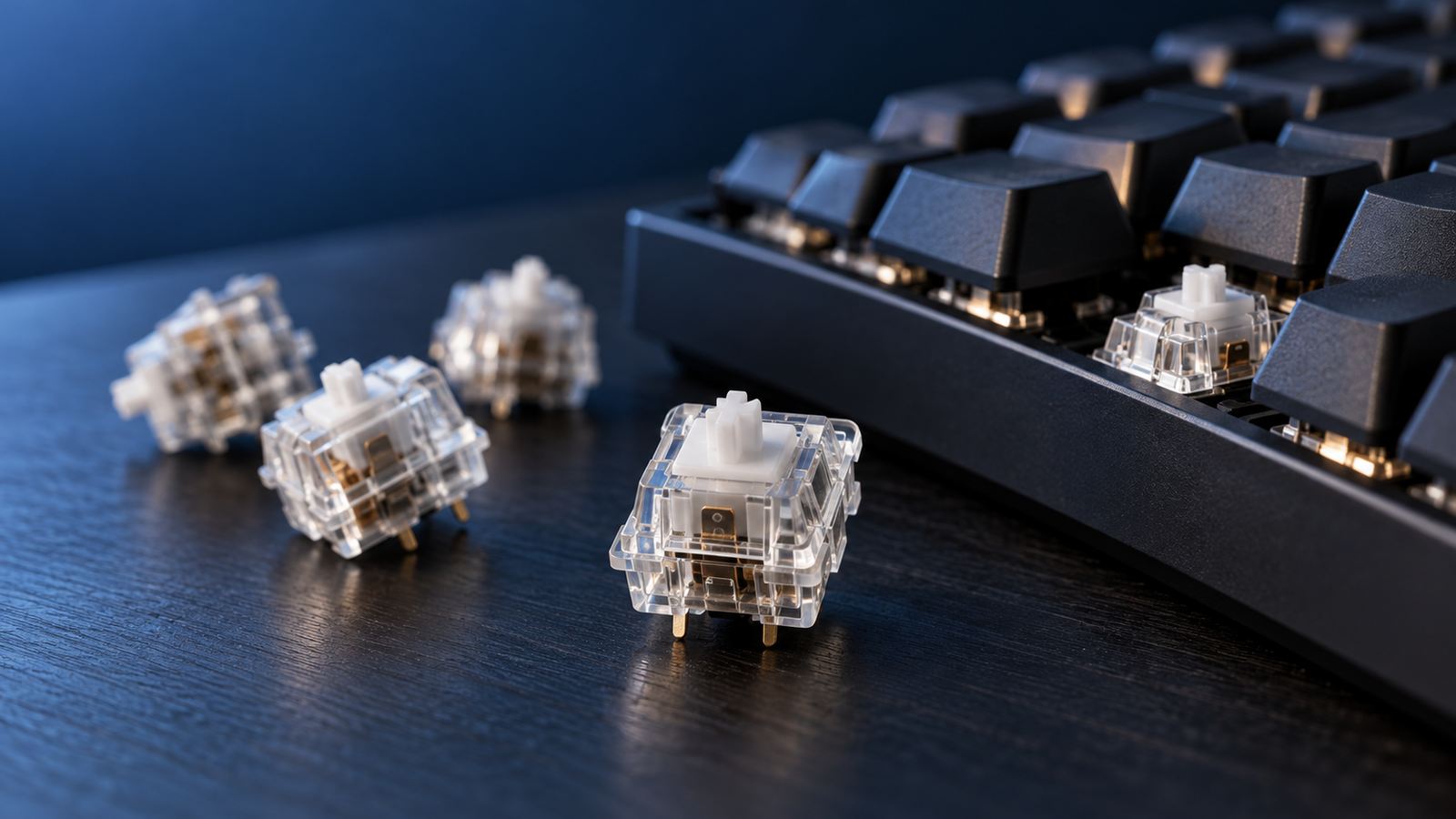
The important part is not the white stem. It is the click bar. Traditional clicky switches such as Cherry MX Blue use a click jacket: a moving plastic sleeve creates the sound and tactile event. Box White uses a small metal bar that the stem snaps past. You hear and feel that snap on the way down, then hear another click as the key returns.
That mechanism gives Box White a more definite separation between “moving” and “actuated.” The click feels cleaner than the rattly event you can get from a worn or loose click-jacket switch. It is still a light click rather than a huge tactile wall. If Box Jade is a door latch, Box White is the click of a good pen—just louder, and repeated under every key.
The box-shaped perimeter around the MX cross stem also helps stabilize the keycap. It does not turn a cheap board into a precision instrument, but the reduced top wobble is noticeable on taller keycaps. Standard MX-style keycaps fit, and the enclosed internal contact design offers extra protection against dust and moisture. Kailh lists the original Box White at roughly 45 gf operating force, 1.8 mm pre-travel, and 3.6 mm total travel.
How they felt after a month of daily use
The first thing I noticed was how little effort the switch asks for relative to its sound. The click is assertive, but the spring is not. That matters over a full workday. Heavier click-bar switches can feel fantastic for a paragraph and tiring by the third hour. Box White keeps most of the drama without making every keypress a small negotiation.
Typing is where the design makes the strongest case for itself. The click gives a clear rhythm, and the return click makes the board feel lively rather than sluggish. I did not need to bottom out hard to know a key had registered. Once I stopped hammering the keys, the experience became less clattery and more controlled.
Gaming is more nuanced. The 1.8 mm actuation is a little shorter than the classic 2 mm MX baseline, but that is not a meaningful competitive advantage by itself. The real benefit is feedback: movement keys feel easy to locate and repeated presses feel distinct. The downside is the same feedback. During rapid strafing or frantic ability use, you hear every input. Some players enjoy that. Others will find the soundtrack exhausting long before a match ends.
The light spring also means Box White is not as deliberately tactile as Box Jade. If you rest heavy fingers on WASD, the switch can feel easier to trigger than its loud personality suggests. It never felt vague to me, but buyers expecting a heavy, typewriter-like press should not assume “clicky” means “stiff.”
Sound: crisp, bright, and very dependent on the board
Switch reviews often describe sound as if the switch lives in a vacuum. It does not. A hollow plastic case can add echo. A metal plate can make the click brighter. Thick PBT keycaps can lower the overall pitch, while thin ABS caps tend to keep things sharp. Desk mats, stabilizers, and even the room change what reaches your ears.
What Box White contributes is a quick metallic snap instead of the broader plastic rattle associated with many blue switches. There is a click on press and another on release. That double event is part of the charm, but it also means the switch produces noise even if you learn not to bottom out.
For a private desk, that sound is genuinely fun. For an open office, shared bedroom, podcast setup, or late-night gaming station, it is a bad social decision dressed up as a switch preference. If your microphone sits on the same desk, use a noise gate or choose something quieter. Our guide to the best silent switches for gaming is the more sensible route.
Kailh Box White specs that actually matter
| Specification | Original Box White | Box White V2 | Why it matters |
|---|---|---|---|
| Switch type | Clicky, click bar | Clicky, click bar | Crisp tactile and audible event on press and release. |
| Operating force | 45 ±15 gf | 45 ±15 gf | Light enough for long typing and quick repeats. |
| Tactile force | 55 ±10 gf | 55 ±15 gf | Noticeable bump without the weight of Jade or Navy. |
| Pre-travel | 1.8 ±0.3 mm | 1.8 ±0.4 mm | Slightly shorter than the familiar 2 mm MX baseline. |
| Total travel | 3.6 ±0.3 mm | 3.6 ±0.3 mm | A conventional full-height feel, not low-profile. |
| Mount | Commonly 3-pin | 5-pin | Check your hot-swap PCB before ordering. |
| Keycap mount | MX-compatible cross | MX-compatible cross | Works with the broad MX keycap ecosystem. |
Kailh rates the Box V2 family for up to 80 million cycles. That number is useful as a broad durability signal, not a promise that every keyboard around the switch will last that long. Sockets, stabilizers, USB ports, and spilled coffee all have their own plans.
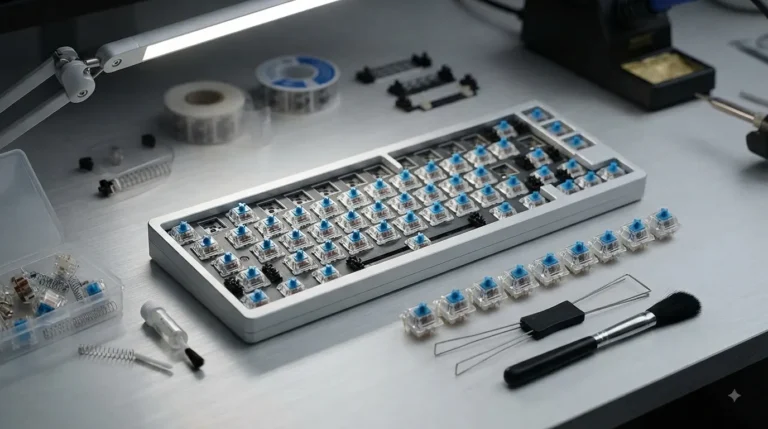
One listing detail deserves caution. Some marketplace copy calls Box White V2 “pre-lubed,” while Kailh’s own V2 product page says the White version is not factory pre-lubed. I would follow the manufacturer’s specification and buy for the click mechanism, not for a lubrication claim. Click bars also are not switches you should casually flood with lubricant; changing friction around the mechanism can weaken the sound and feel you bought them for.
Which Kailh Box White should you buy?
For most modern custom boards, the V2 5-pin pack is the cleaner fit. The extra locating pins help stability on compatible PCBs, and the longer spring gives the return a little more energy. A 72-switch pack covers the majority of 60% and 65% layouts with a few spares, but count your board before ordering. A 75% keyboard often needs roughly 82–84 switches; TKL and full-size boards need more.
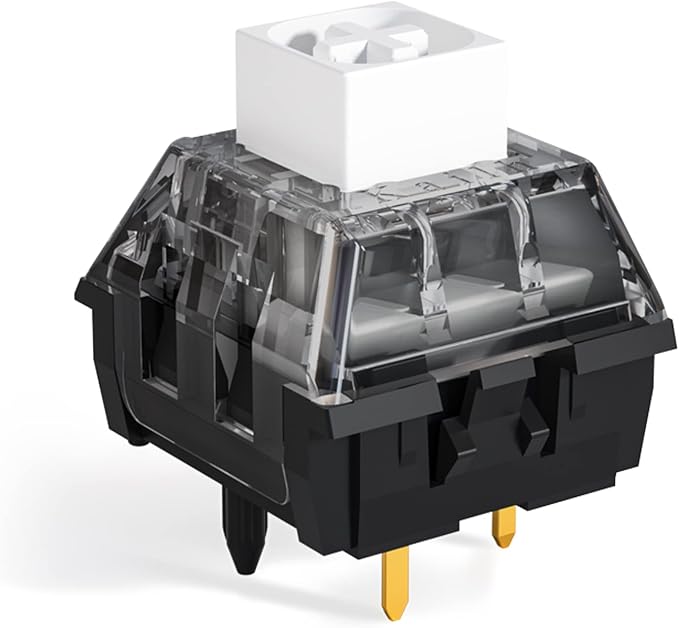
Best for compact 5-pin builds
Kailh Box White V2 — 72 Pack
- Best for: most 60% and 65% hot-swap keyboards
- Mount: 5-pin; verify the socket before ordering
- Feel: light click-bar tactility with a lively return
- Watch for: 72 switches are not enough for most TKL or full-size boards
If you are filling a TKL or full-size board, the 120-count Glorious pack is the easier one-box purchase. It uses the original 3-pin Box White, so it is especially convenient for plate-mount hot-swap boards. The larger pack also leaves useful spares. Switches are small, pins bend, and keeping a handful in the drawer is cheaper than discovering a single dead key later.
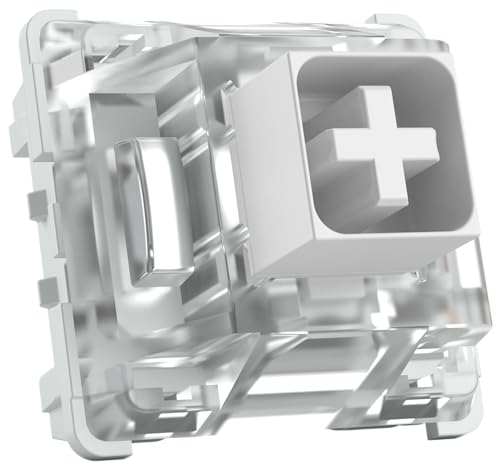
Best full-board pack
Glorious Kailh Box White — 120 Pack
- Best for: TKL, 96%, full-size, or builders who want spares
- Mount: 3-pin plate mount
- Compatibility: MX-style keycaps and mechanical hot-swap sockets
- Watch for: this is the original Box White, not the 5-pin V2
Box White vs. Cherry MX Blue, Box Jade, and Box Navy
Cherry MX Blue is the familiar baseline. It is easy to find in prebuilt keyboards, but the click jacket can feel less precise and sound more plasticky. Choose Blue if keyboard availability matters more than the cleanest click. Choose Box White if you are already shopping for loose switches and want a sharper event.
Kailh Box Jade uses a thicker click bar and a stronger tactile event. It is the enthusiast favorite for people who want every press to announce itself. The tradeoff is fatigue. Jade is more dramatic; White is easier to live with. If you type all day and still want click-bar character, White is the safer recommendation.
Kailh Box Navy goes heavier again. It can feel excellent on a few deliberate keys, but a full board is demanding unless you already know you like high force. Navy is the vintage-heavy option. White is the approachable one.
For a wider view of the family, see our Kailh switches guide. Our clicky gaming switch roundup also compares Box designs with other current choices.
Gaming performance: good feedback, no magic speed
Box White works well for gaming if you like knowing exactly when a key moves through its tactile event. The spring is light, the return is quick, and the slightly shorter pre-travel keeps inputs feeling immediate. For RPGs, strategy games, and mixed typing-and-gaming use, it is an easy switch to enjoy.
For competitive shooters, preference matters more than the “gaming” label. Linear switches remove the tactile event and can feel smoother during rapid direction changes. Hall Effect boards add rapid trigger and adjustable actuation—features a conventional mechanical switch cannot copy. Box White is not slow, but it is not a hidden esports upgrade either.
The better question is whether the click helps your control or distracts you. If audible confirmation keeps your presses deliberate, Box White is a legitimate gaming choice. If you want the cleanest repeated motion and the least microphone noise, a linear or magnetic board makes more sense. Our linear vs. tactile vs. clicky guide explains that tradeoff without pretending one type wins every game.
Who should buy Kailh Box White?
- Buy it if you want a crisp click without a heavy spring.
- Buy it if you type for long stretches and enjoy audible rhythm.
- Buy it if MX Blue feels loose or plasticky but Box Jade feels excessive.
- Skip it if another person works, sleeps, records, or studies near your keyboard.
- Skip it if your board uses optical, low-profile, or Hall Effect sockets.
- Skip it if you want strong tactility more than a light, fast press.
Verdict: the clicky sweet spot earns its name
Kailh Box White succeeds because it does not chase the biggest click or the heaviest bump. It takes the clean snap of a click bar, pairs it with a genuinely light spring, and leaves you with a switch that remains enjoyable beyond the first five minutes of novelty.
After a month as a daily driver, my recommendation is straightforward: buy Box White if you want a clicky switch for real daily typing and do not share the acoustic space. Choose the 72-pack V2 for a compatible compact build, or the 120-pack original version when you need to fill a larger board. Skip both if quiet matters. For everyone else who finds MX Blue a little sloppy and Box Jade a little much, this is the sweet spot.
Technical specifications were cross-checked against Kailh’s Box switch guide and Box V2 product page. Product availability can change.
This article contains affiliate links. If you buy through them, I earn a small commission at no extra cost to you. I only recommend keyboards I’ve actually tested. As an Amazon Associate I earn from qualifying purchases.