Gasket Mount vs Tray Mount vs Top Mount Keyboards Explained

This article contains affiliate links. If you buy through them, I earn a small commission at no extra cost to you. I only recommend keyboards I’ve actually tested. As an Amazon Associate I earn from qualifying purchases.
“Gasket mount” gets thrown around like it’s a guarantee of good sound, and it isn’t. I’ve typed on $400 gasket boards that sounded like a tin can full of marbles, and I’ve owned $90 tray-mount keyboards that thock so well you’d swear somebody snuck a tape mod in there before shipping. Mounting style matters — a lot — but it’s one variable in a stack of about ten, and the marketing has gotten ahead of the engineering. So before you drop an extra hundred bucks because a product page brags about “isolation gasket mount with poron strips,” let’s actually break down what’s going on inside the case.
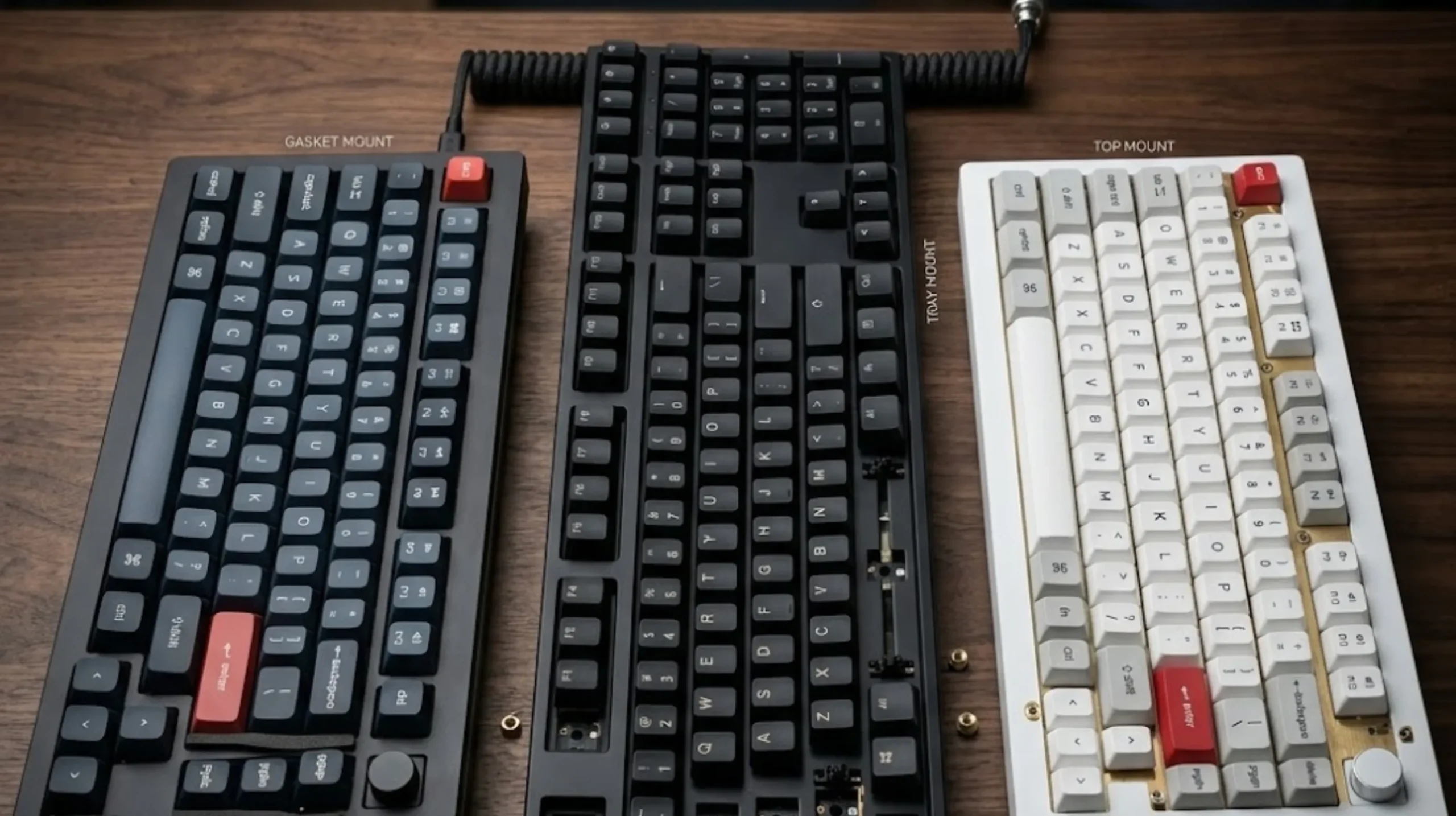
A gasket mount keyboard suspends the plate between strips of soft material — usually poron or silicone — sandwiched between the top and bottom housing. Tray mount screws the PCB straight into posts molded into the bottom shell. Top mount bolts the plate directly into the top case. Each one gives you a different feel under your fingers and a different sound coming out of the keys. I’ve owned and modded examples of all three, and the differences are real — just not in the order most reviews would have you believe.
Quick Comparison: Best Picks by Use Case
Here’s the TL;DR if you came for a verdict, not a lecture.




| You want… | My pick | Mount style | Why it earns the spot |
|---|---|---|---|
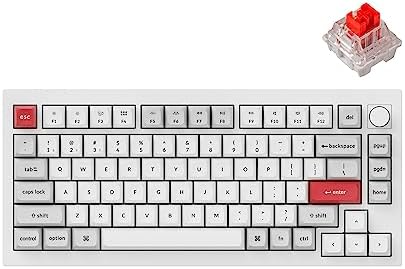
| Best overall gasket mount keyboard under $200 | Keychron Q1 Pro | Gasket | Hot-swap, QMK/VIA, solid stock sound, build feels twice the price |
| Best budget gasket mount | Keychron V1 / V Max | Gasket | About $90, plays nicer than half the $200 boards from a few years ago |
| Best tray-mount daily driver | Ducky One 3 | Tray | Tight stabs, great PBT caps, proof that tray can still sound great |
| Best top-mount enthusiast pick | Mode SixtyFive | Top (configurable) | Multiple plate/mount options, premium fit and finish |
| Best premium gasket mount | Mode Sonnet | Gasket | Worth it only after you’ve burned through the cheaper boards |
| Best gasket mount for gamers | Glorious GMMK Pro | Gasket-style isolation | 1000Hz polling, hot-swap, doesn’t punish fast fingers |
| Cheapest “feels expensive” pick | Epomaker TH80 Pro / Akko 5075B | Gasket-ish | Way more board than you pay for |
Now the actual breakdown.
What Is a Gasket Mount Keyboard, Really?
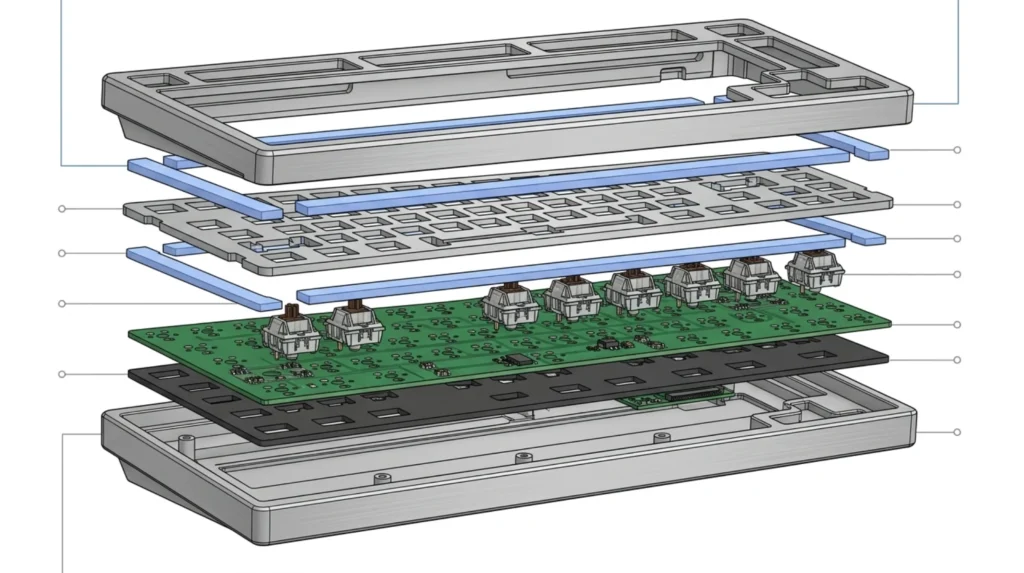
In a gasket-mount design, the plate (the metal or polycarbonate sheet your switches click into) doesn’t touch the case directly. Strips of foam — typically poron, sometimes silicone — sit between the plate and the top and bottom housing. The plate is “floating,” in the loosest sense of the word.
What you get out of it:
- A softer typing feel. There’s a tiny amount of give when you bottom out. Some folks love it; some find it mushy.
- A deeper, more muted sound profile. That “thocc” the community can’t shut up about — gasket mounting contributes to it, though plate material and case material matter just as much.
- Less ping and case resonance. Done right, you don’t get the hollow ringing you sometimes hear in cheaper tray-mount boards.
Here’s the catch: a gasket mount is only as good as the gaskets themselves and how the case is engineered around them. Plenty of budget boards slap a strip of foam on the plate, call it “gasket mount,” and call it a day. That’s not the same as a properly tuned design like a Mode Sonnet or a Keychron Q1 Pro, where the gaskets, plate, foam stack, and PCB are all working together. Don’t pay a premium for the word — pay for the implementation.
Tray Mount: The Old Workhorse
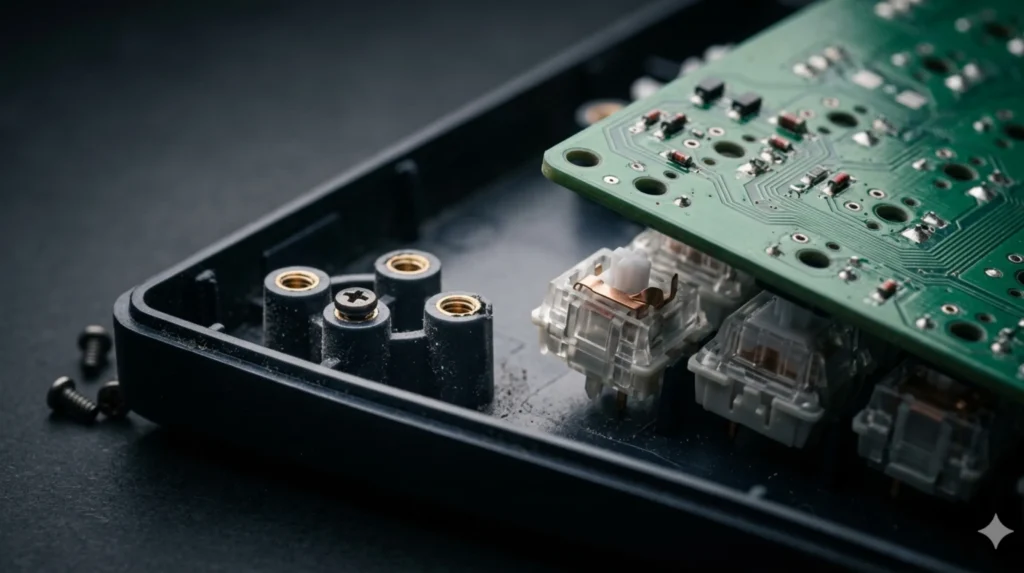
Tray mount is the original. The PCB screws directly into posts inside the bottom case. That’s it. No gaskets, no isolation, no fancy engineering. It’s cheap to manufacture, easy to assemble, and it dominated the keyboard market for years — which is why your old Filco, your office Logitech, and probably half the gaming boards in your closet are tray mount.
What tray mount actually feels like:
- Stiff. When you bottom out, you’re hitting the case, basically. There’s no give.
- Inconsistent across the board. Keys directly over a screw post feel firmer than keys between posts. On a 65% you might not notice; on a full-size, you definitely will.
- Prone to hollowness. Without foam mods, a lot of tray-mount cases ring like a snare drum.
But — and this is where I push back on the gasket evangelists — tray mount isn’t dead. The Ducky One 3 is tray mount and it’s one of the best-sounding stock keyboards I’ve used in the last three years. Mod a tray-mount board with PE foam and a strip of plate foam and it can rival a mid-tier gasket build for less than half the money. Tray mount is also the format that responds best to tape and foam mods. If you like tinkering, this is actually the more interesting starting point.
Top Mount: The Stiff, Predictable One
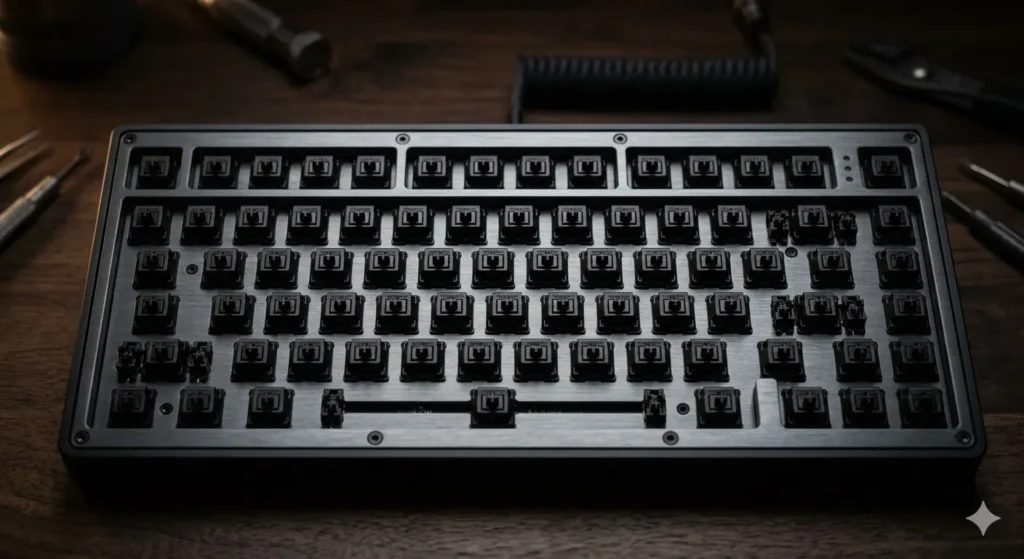
Top mount screws the plate directly into the top half of the case. The plate is held firmly from above, with nothing isolating it from the housing. You’ll see it on a lot of higher-end customs — older TGR boards, plenty of GMK runs, certain Mode and Bauer configurations.
What top mount gives you:
- A very uniform typing feel — every key feels the same, unlike tray.
- A sharper, often clackier sound — especially with an aluminum plate.
- A stiffer bottom-out than gasket, but more controlled than tray.
This is the mount style that splits enthusiasts hardest. Some people love how direct it feels — there’s no bounce, no softness, just the switch and the plate doing their job. Others find it fatiguing for long typing sessions. Honestly, I run hot and cold on it. For a snappy 60% I want to game on, top mount with a polycarbonate plate is fantastic. For an eight-hour writing day, I usually reach for a gasket board instead.
Gasket Mount Keyboard vs Top Mount vs Tray Mount: Feel and Sound

Here’s the comparison most of you actually came for, with my honest take on each metric.
| Metric | Tray Mount | Top Mount | Gasket Mount Keyboard |
|---|---|---|---|
| Typing feel | Stiff, uneven | Stiff, uniform | Soft, bouncy |
| Sound profile | Hollow stock, deep with mods | Clacky, sharp | Deeper, more muted |
| Consistency across keys | Worst | Best | Very good |
| Mod payoff | Huge | Moderate | Already tuned |
| Price floor | $50 and up | $150 and up | $90 and up |
| Best for | Modders, budget builds | Snappy gaming, clack lovers | Long typing sessions, thock hunters |
| Common complaint | Pings, inconsistent | Fatiguing over hours | Mushy if poorly tuned |
A few things worth saying plainly:
- Mounting style isn’t the whole story. Plate material (brass vs aluminum vs FR4 vs polycarbonate) probably affects sound more than mount style on most boards. PE foam mods can do more for an $80 board than swapping it for a $200 one with a fancier mount.
- Gasket mount doesn’t automatically mean “better.” It means “different, and probably softer.”
- Most office workers and gamers genuinely can’t tell the difference in a blind test. That’s not an insult — it’s just true. The differences are real, but they’re small.
Which Mounting Style Should You Actually Buy?

Quick recommendations, sorted by what you actually do at your computer:
- You game more than you type all day. Top mount, or a stiff gasket. Soft, bouncy boards can feel imprecise during fast key presses. Look at the Glorious GMMK Pro, Mode SixtyFive, or any 60–65% with a polycarbonate plate.
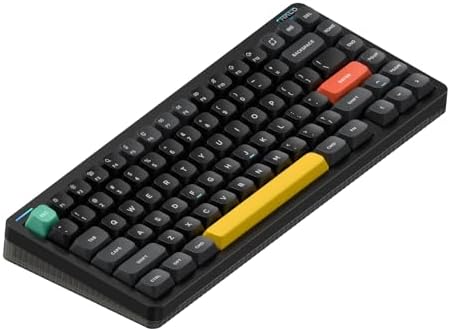
- You type for a living. Gasket mount. I’m writing this on a Keychron Q1 Pro and my wrists are happier for it. Check out the Q-series, Mode Sonnet, or NuPhy Halo75.
- You like to mod and tinker. Tray mount, full stop. You can buy a $90 board, dump $15 of foam and tape into it, and walk away with something genuinely impressive. Ducky One 3, GMMK 2, or basically any sub-$100 board with hot-swap.
- You just want a keyboard that works and don’t care about thock. Tray mount is fine. You’re not missing as much as the forums want you to think.
The Honest Truth About Gasket Mount Hype
I’ll close where I opened. Mounting style matters, but it’s been inflated into a buying decision it doesn’t quite deserve to be. A well-built tray-mount board with smart foam choices beats a poorly engineered gasket-mount one every single time. A $90 gasket board from Keychron with a tape mod beats a $250 “premium” board with mediocre stabilizers. The mount is one piece of the puzzle, not the whole picture.
If you’re spending under $150, prioritize hot-swap sockets, decent stabilizers, and a real PBT keycap set over mount style. If you’re spending over $200, then yes — gasket mount is probably what you want, because at that price point you should be getting a tuned acoustic experience, not just a hollow case with a fancy badge. And if you already own a solid tray-mount board, I’d genuinely push you to spend $15 on PE foam and try a tape mod before you drop $300 on something new. You might surprise yourself.
This article contains affiliate links. If you buy through them, I earn a small commission at no extra cost to you. I only recommend keyboards I’ve actually tested. As an Amazon Associate I earn from qualifying purchases.